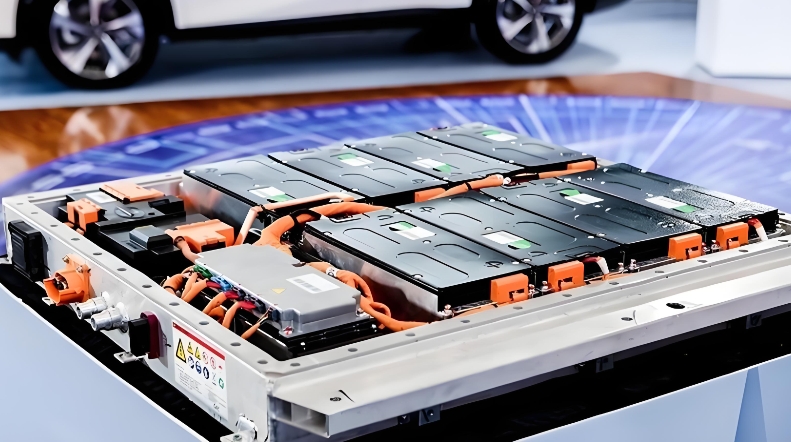
Recent breakthroughs in battery technology within the new energy sector have yielded several noteworthy developments.
🔋 Breakthrough in Core Lithium Battery Technology
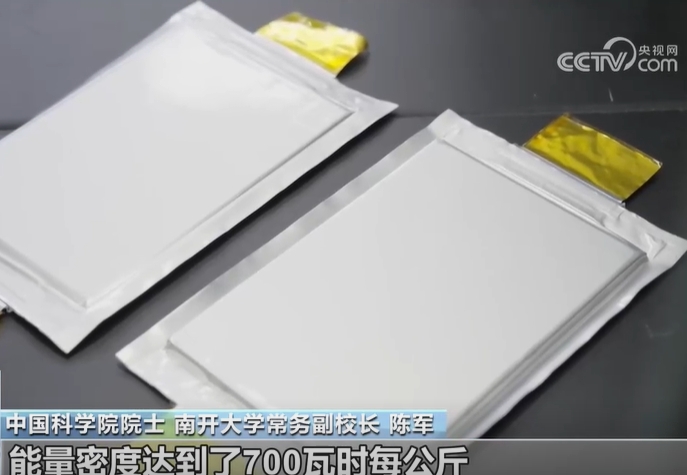
Research teams from Nankai University, the Shanghai Institute of Space Power, and other institutions have achieved a pioneering breakthrough in lithium battery technology. The team designed and synthesised a series of novel fluorinated hydrocarbon solvent molecules, establishing an entirely new electrolyte system that successfully replaces the traditional lithium-oxygen coordination approach in conventional electrolytes.
The breakthrough lies in its potential to double the endurance of existing lithium batteries at equivalent size and weight. Utilising this electrolyte system, researchers have achieved reversible cycling of ultra-high energy-density lithium metal batteries at 700 Wh/kg under ambient temperatures. Concurrently, the battery’s low-temperature performance has been significantly enhanced, maintaining an energy density approaching 400 Wh/kg even in extreme cold conditions of -50°C. Published in the international academic journal Nature in the early hours of 26 February, this achievement offers broad prospects for applications in high-end scenarios such as new energy vehicles, embodied intelligent robots, low-altitude economy, equipment for frigid regions, and aerospace.
🔋 Next-Generation Advances in Solid-State Battery Technology
From the laboratory research mentioned earlier to the current phase where multiple enterprises have entered pilot production or even mass production, solid-state batteries are advancing towards practical application at an unprecedented pace.
🚀 Application Scenarios: From Earth to Space
The high energy density and superior safety advantages of solid-state batteries have rapidly expanded their application scope beyond new energy vehicles.
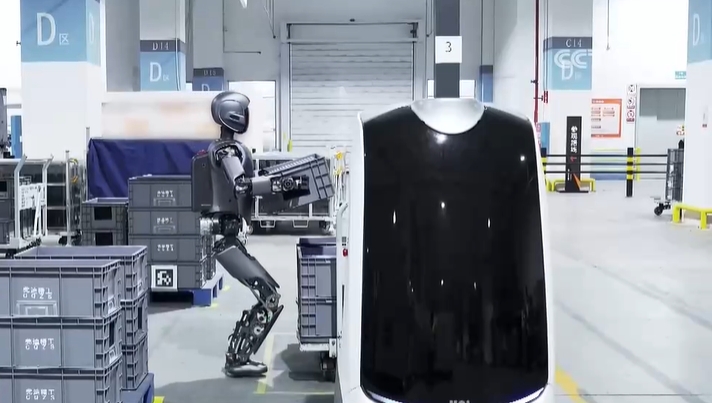
High-End Consumer and Industrial Sectors: Xinjie Energy’s solid-state batteries are already deployed in Zhongqing Robotics, supplying prismatic pouch cells with an energy density of 480Wh/kg. Concurrently, their products have been delivered in bulk for computing satellites, currently undergoing in-orbit validation – marking China’s first breakthrough in commercial aerospace applications for solid-state batteries.
Low-Altitude Economy: Solid-state batteries are regarded as the ideal power source for eVTOLs (electric vertical take-off and landing aircraft). Xinjie Energy is establishing the industry’s first mass production line for aviation solid-state batteries to meet future demand for thousands of eVTOLs. GAC Group also plans to equip its flying car brand ‘Gaoyi’ with self-developed all-solid-state batteries.
Electric Bicycle Battery Swapping: Pure Lithium New Energy plans to expand its solid-state battery electric bicycle battery swapping pilot project in Beijing’s Yizhuang area to 100 swapping cabinets and 1,000 electric bicycles, exploring safer energy solutions for urban short-distance travel.
🔬 Technical Pathways: Parallel Breakthroughs Across Multiple Routes
The solid-state battery sector exhibits parallel development across multiple technical pathways, with different enterprises selecting distinct breakthrough directions based on their respective strengths:
Sulphide Pathway: Widely regarded as the mainstream direction within the industry, offering high ionic conductivity. Leading enterprises such as BYD and CATL are actively developing this route, which the domestic industrial sector has also prioritised as its primary focus, with plans for small-scale mass production by 2027.
Oxide Pathway: Represented by Xinjie Energy, this approach employs ‘high-voltage-tolerant oxide solid-state electrolytes paired with lithium metal anodes,’ achieving gigawatt-hour-scale production that balances performance with engineering feasibility.
Polymer and Composite Pathway: Pure Lithium New Energy pioneered ‘organic-inorganic hybrid electrolytes,’ seeking an optimal equilibrium between cost, safety, and performance.
⛰️ Practical Challenges: Cost and Supply Chain Bottlenecks
High Costs: Current solid-state battery costs (e.g., sulphide systems at approximately $158.8/kWh) significantly exceed traditional liquid lithium batteries ($118.7/kWh). Low product yield rates further escalate expenses.
Immature Supply Chain: Upstream materials (e.g., high-purity lithium sulphide) lack scalable production; midstream specialised equipment and process standards remain undefined; downstream automotive-grade validation systems are incomplete. Transitioning from ‘production line integration’ to ‘stable vehicle integration’ demands extensive process tuning and rigorous testing.
Technical hurdles remain: Challenges including solid-solid interface contact, dendrite suppression, and cycle life require sustained research. For instance, thermal management issues exposed during Donut Lab’s fast-charging tests underscore the need for further technological refinement.
💎 Summary
The solid-state battery industry has now entered a critical transition phase from ‘prototype’ to ‘commercial product’. While challenges in cost and supply chain remain formidable, the pace of technological breakthroughs and industrialisation is undeniably accelerating.